
Biological Macromolecules
Carbohydrates, lipids, proteins, and nucleic acids built by dehydration synthesis.
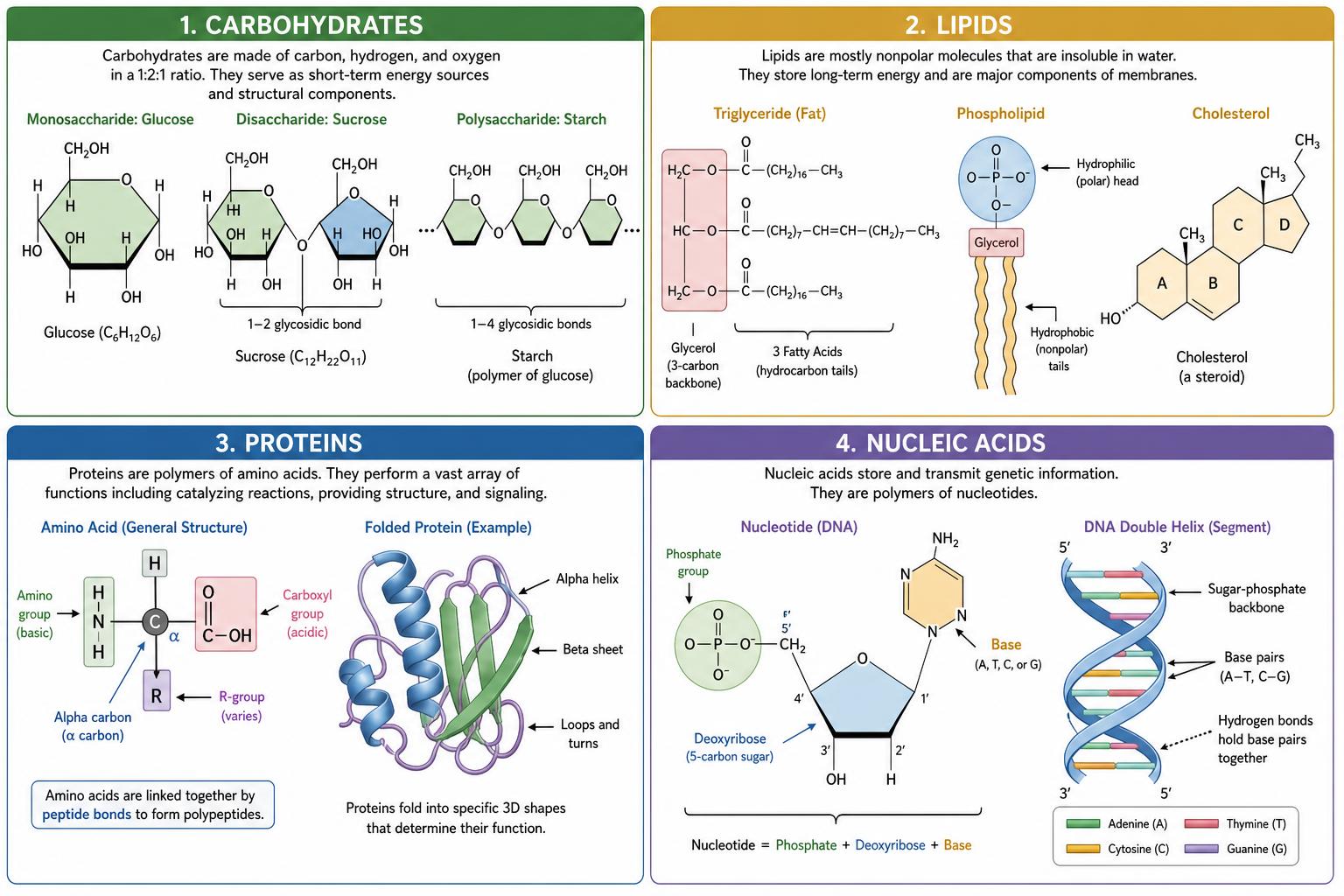
Monomers, polymers, and the two reactions to remember
Carbohydrates, proteins, and nucleic acids are polymers built from repeating or related monomers. Lipids are large biological molecules, but they are not true polymers because they are not made from long chains of repeating monomer units.
The two reactions to know well are dehydration synthesis (build) and hydrolysis (break). Dehydration synthesis: two monomers are joined and one water molecule is released. Hydrolysis is the reverse: a water molecule is added across the bond, regenerating the two monomers.
Dehydration synthesis and hydrolysis are especially important in the formation and breakdown of carbohydrates, proteins, and nucleic acids. Some lipids are also assembled through condensation reactions (e.g., joining fatty acids to glycerol), but lipids are not true polymers.
Carbohydrates
Monomers are monosaccharides (e.g., glucose, fructose, galactose) with the general formula (CH₂O)ₙ. Two monosaccharides linked by a glycosidic bond form a disaccharide (sucrose, lactose, maltose).
Polysaccharides differ in branching and bond orientation: starch (α-1,4 linked glucose — plant energy storage), glycogen (highly branched α-glucose — animal energy storage), cellulose (β-1,4 linked glucose — plant cell wall fiber, indigestible to humans), and chitin (modified glucose — fungal walls and arthropod exoskeletons).
- Quick energy: monosaccharides feed glycolysis directly.
- Storage: starch in plants, glycogen in liver/muscle.
- Structural: cellulose, chitin.
Lipids
Lipids are not true polymers — they're a chemical category united by being mostly nonpolar (hydrophobic). The exam focuses on three types: triglycerides, phospholipids, and steroids.
Triglycerides are glycerol + 3 fatty acids joined by ester bonds. Saturated fatty acids have no C=C double bonds, pack tightly, and are solid at room temperature (butter, lard). Unsaturated fatty acids contain double bonds that put kinks in the chain, preventing tight packing — they're liquid at room temperature (vegetable oils).
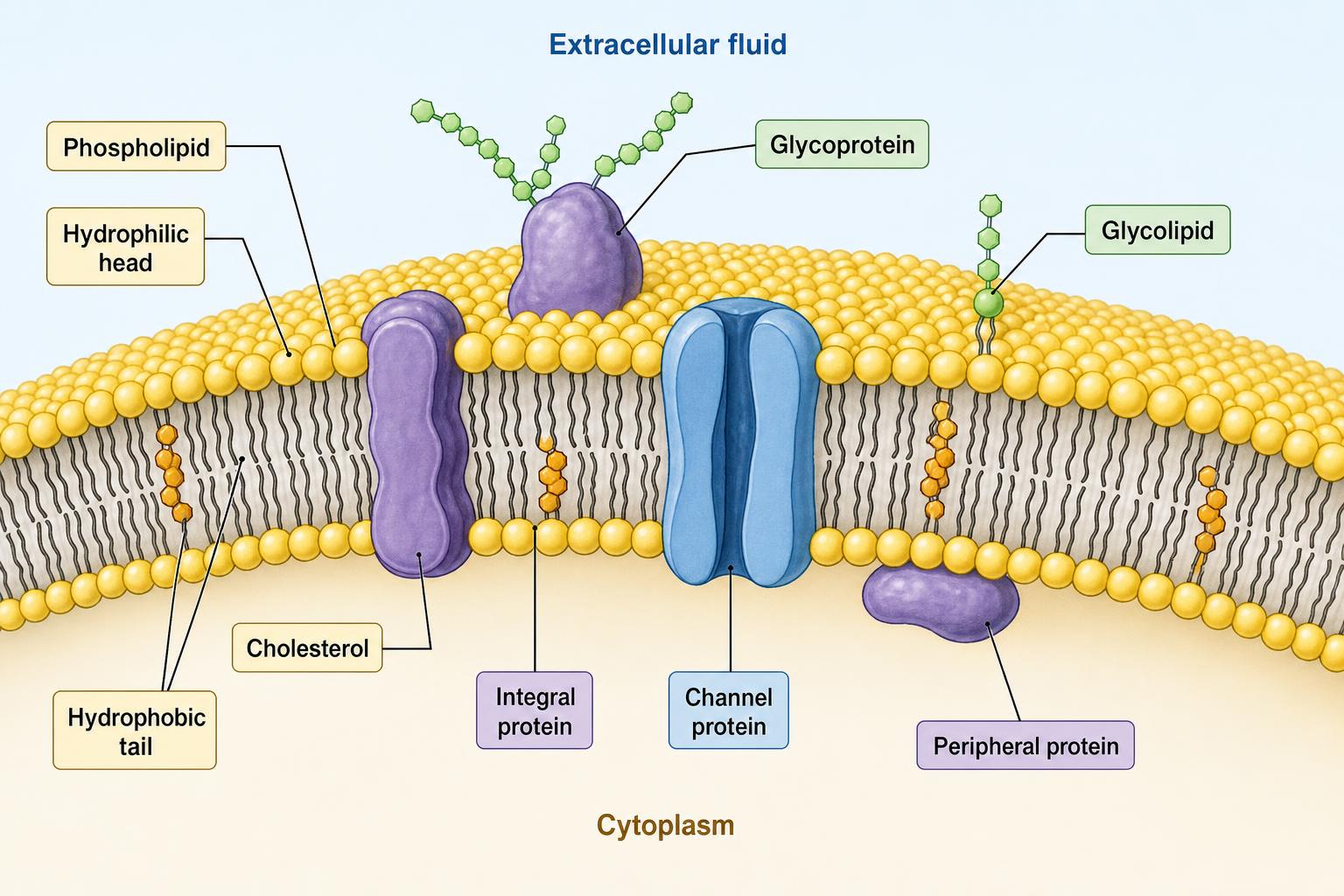
Phospholipids are amphipathic: a hydrophilic phosphate head and two hydrophobic fatty-acid tails. In water they spontaneously form bilayers, the basis of every cell membrane.
Steroids (cholesterol, testosterone, estrogen) share a four-fused-ring backbone with different functional groups attached.
Proteins
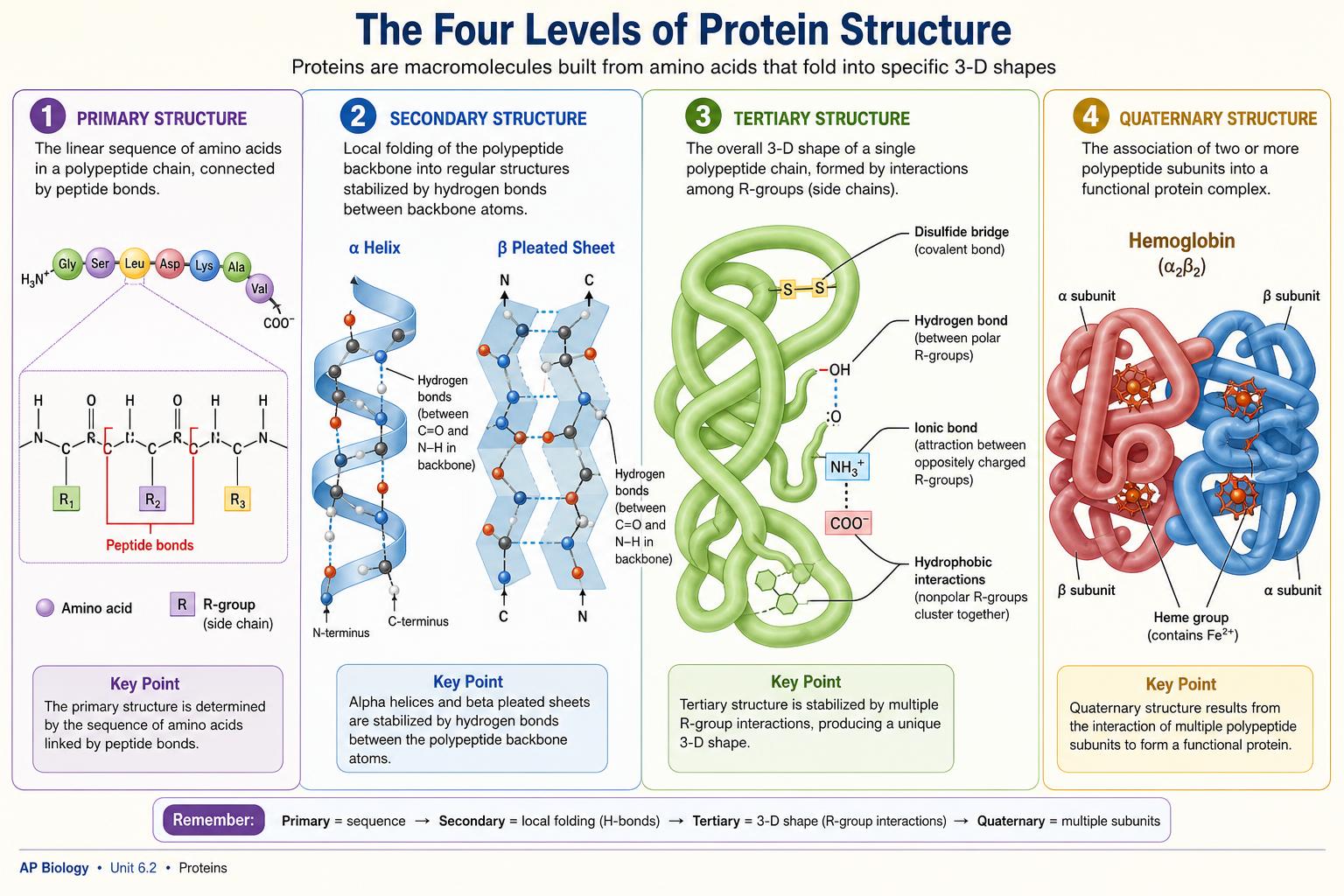
Proteins are polymers of amino acids. Every amino acid has the same core (central α-carbon, amino group, carboxyl group, H) plus a variable R-group that determines its chemical personality: nonpolar, polar, acidic, or basic.
Amino acids link via peptide bonds (covalent bonds between the carboxyl of one and the amino of the next, releasing water). The resulting polypeptide has direction — an N-terminus and a C-terminus.
Proteins do almost everything in the cell: catalysis (enzymes), structure (collagen, keratin), transport (hemoglobin, channel proteins), defense (antibodies), signaling (receptors, hormones like insulin), and movement (actin, myosin).
Nucleic acids
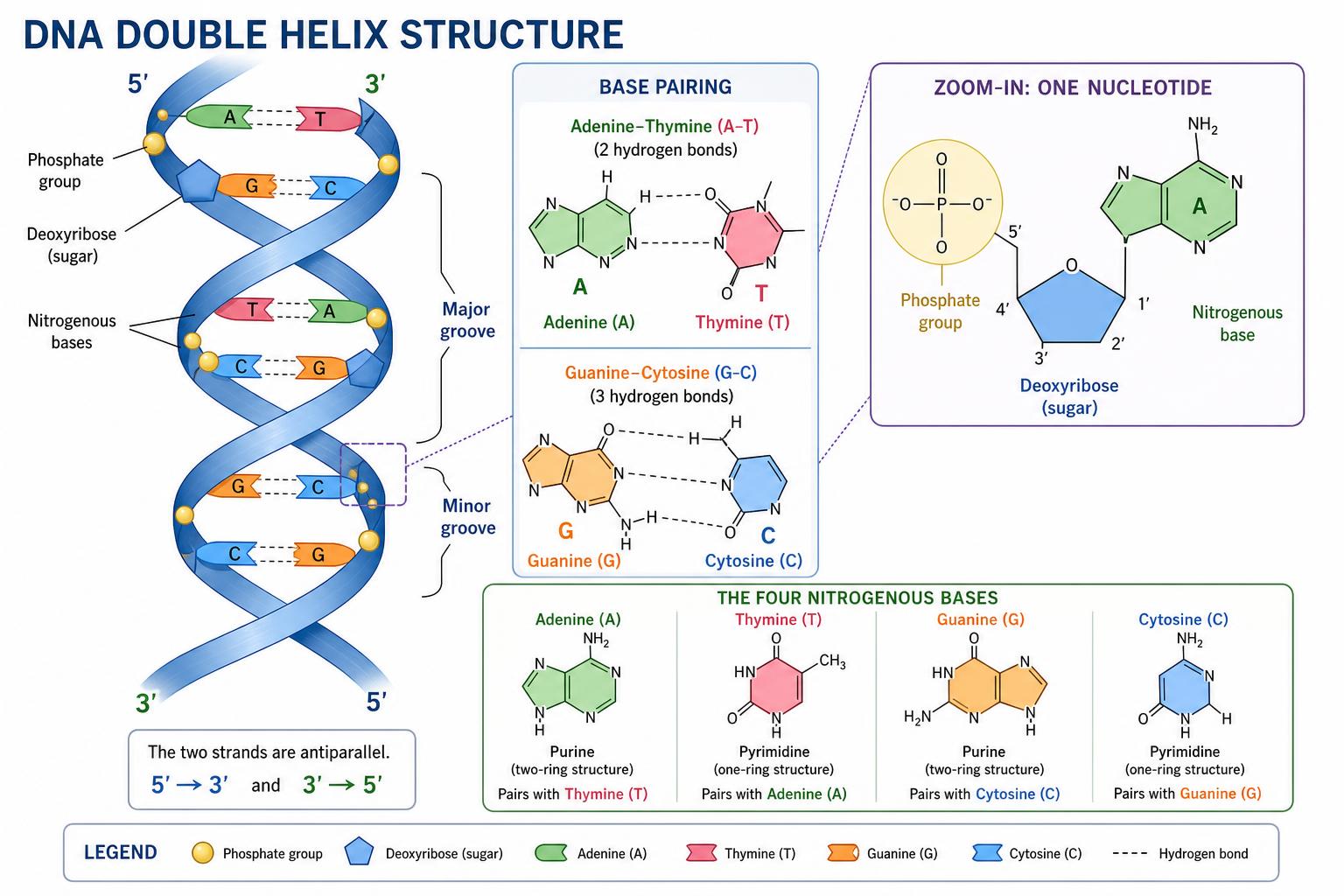
Nucleotides are the monomers and consist of a 5-carbon sugar (deoxyribose in DNA, ribose in RNA), a phosphate group, and a nitrogenous base. Bases are either purines (A, G — two rings) or pyrimidines (C, T, U — one ring).
Nucleotides are joined by phosphodiester bonds between the 3' carbon of one sugar and the 5' phosphate of the next, giving each strand directionality (5' → 3').
DNA is a double helix of antiparallel strands held together by complementary base pairing: A–T (2 H-bonds) and G–C (3 H-bonds). RNA is usually single-stranded and uses U in place of T.
Key terms
Quick definitions to lock in before the exam.