
Cellular Respiration
Glucose → ATP via glycolysis, Krebs, and the ETC.
Overview
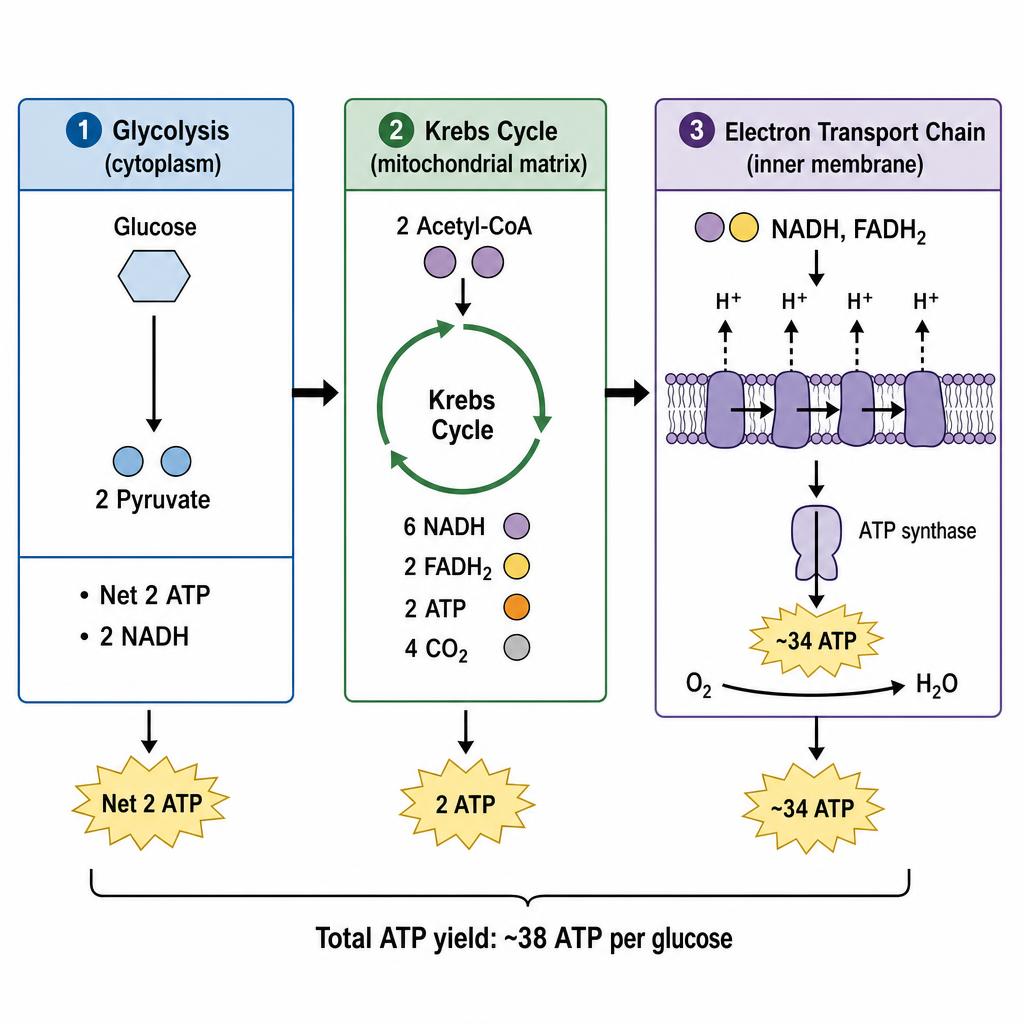
Cellular respiration breaks down glucose to capture its energy in ATP. Overall: C₆H₁₂O₆ + 6 O₂ → 6 CO₂ + 6 H₂O + ~30–32 ATP. Four stages: glycolysis → pyruvate oxidation → Krebs cycle → oxidative phosphorylation (ETC + chemiosmosis).
Glycolysis (cytoplasm)
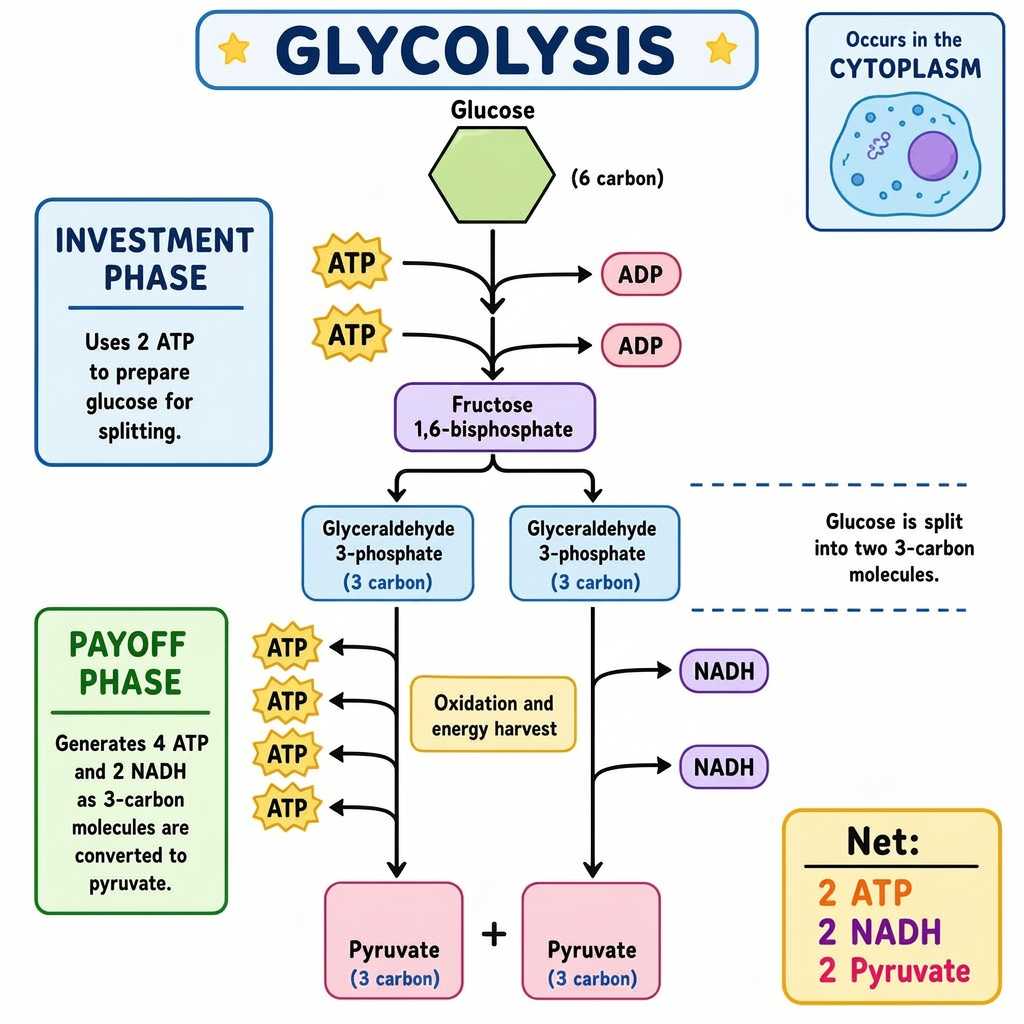
Splits glucose (6C) into 2 pyruvate (3C). Investment phase uses 2 ATP to prime glucose; payoff phase makes 4 ATP and 2 NADH. Net per glucose: 2 ATP, 2 NADH, 2 pyruvate.
Glycolysis is ancient and universal — it works without oxygen. Every cell on Earth can do it.
Pyruvate oxidation (mitochondrial matrix)
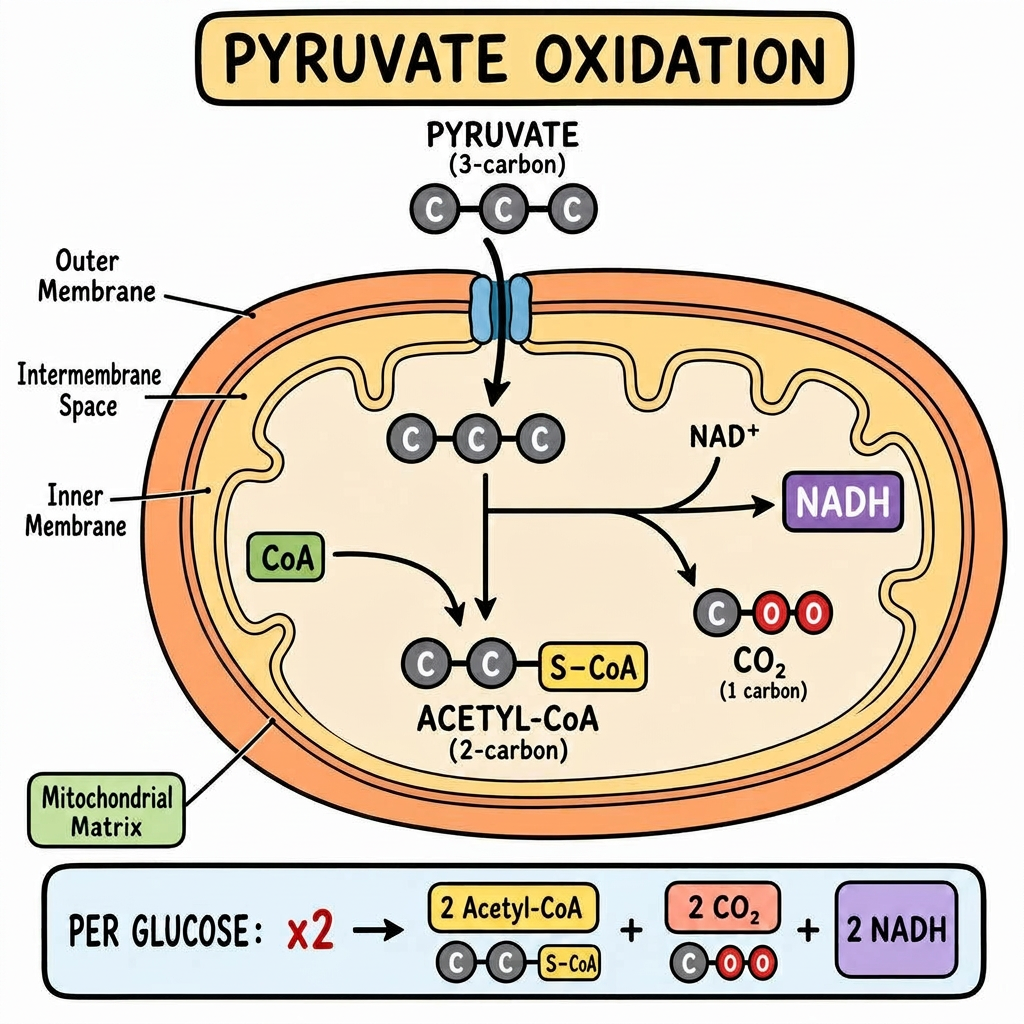
Each pyruvate (3C) enters the mitochondrion and is converted to acetyl-CoA (2C) + CO₂, producing 1 NADH. Per glucose: 2 acetyl-CoA, 2 CO₂, 2 NADH.
Krebs cycle (citric acid cycle)
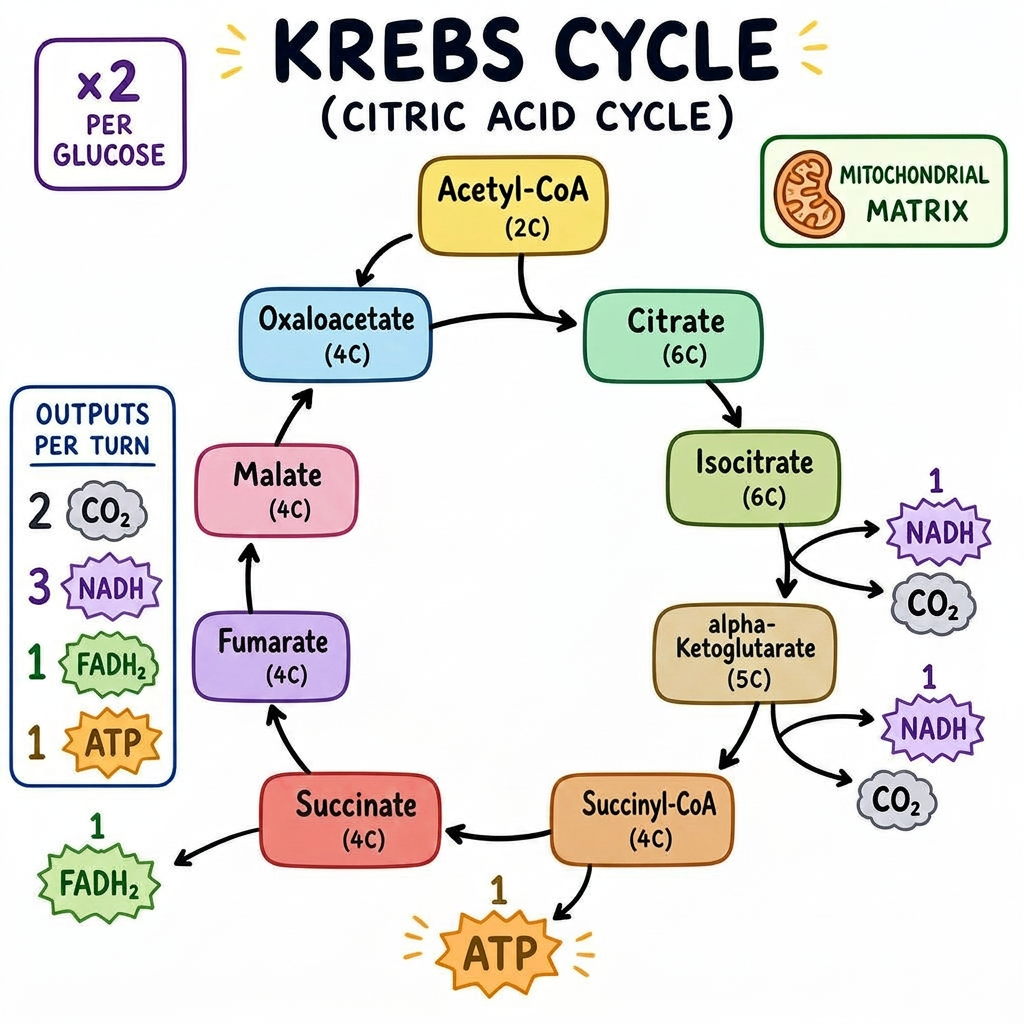
Acetyl-CoA joins oxaloacetate to form citrate. As the cycle proceeds, carbons are released as CO₂ and high-energy electrons are captured on NADH and FADH₂. Per glucose (2 turns): 2 ATP, 6 NADH, 2 FADH₂, 4 CO₂.
After the Krebs cycle, all 6 carbons of the original glucose have been released as CO₂. The energy is now stored in the electron carriers NADH and FADH₂, waiting for the ETC.
Electron transport chain & chemiosmosis
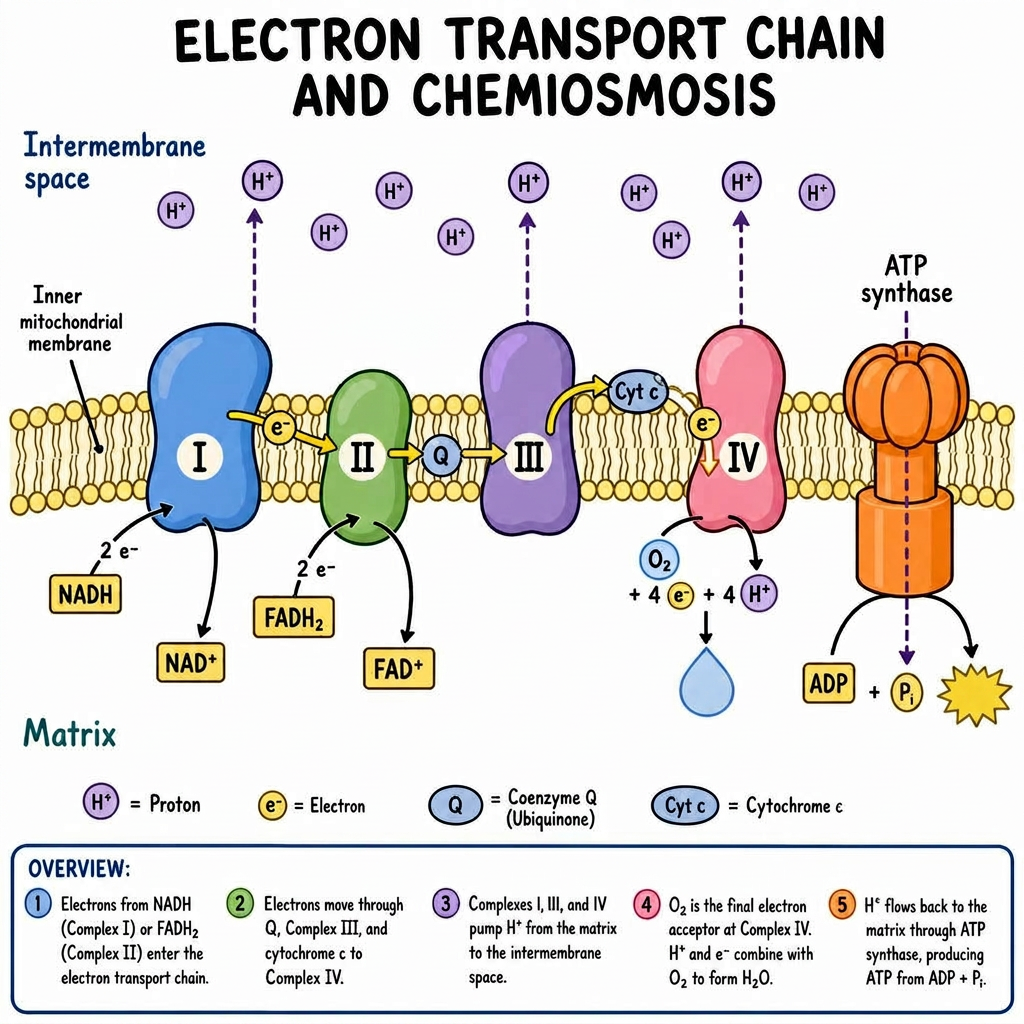
NADH and FADH₂ drop their electrons into the ETC in the inner mitochondrial membrane. As electrons fall through the chain, the energy released is used to pump H⁺ from the matrix into the intermembrane space, building an electrochemical gradient.
H⁺ flows back into the matrix through ATP synthase — a molecular turbine — driving ATP synthesis. This is chemiosmosis. NADH yields ~2.5 ATP per molecule; FADH₂ ~1.5.
Oxygen is the final electron acceptor: it combines with electrons and H⁺ to form H₂O. Without O₂, the ETC backs up, NAD⁺/FAD can't be regenerated, the Krebs cycle stalls, and ATP production crashes.
Fermentation — life without oxygen
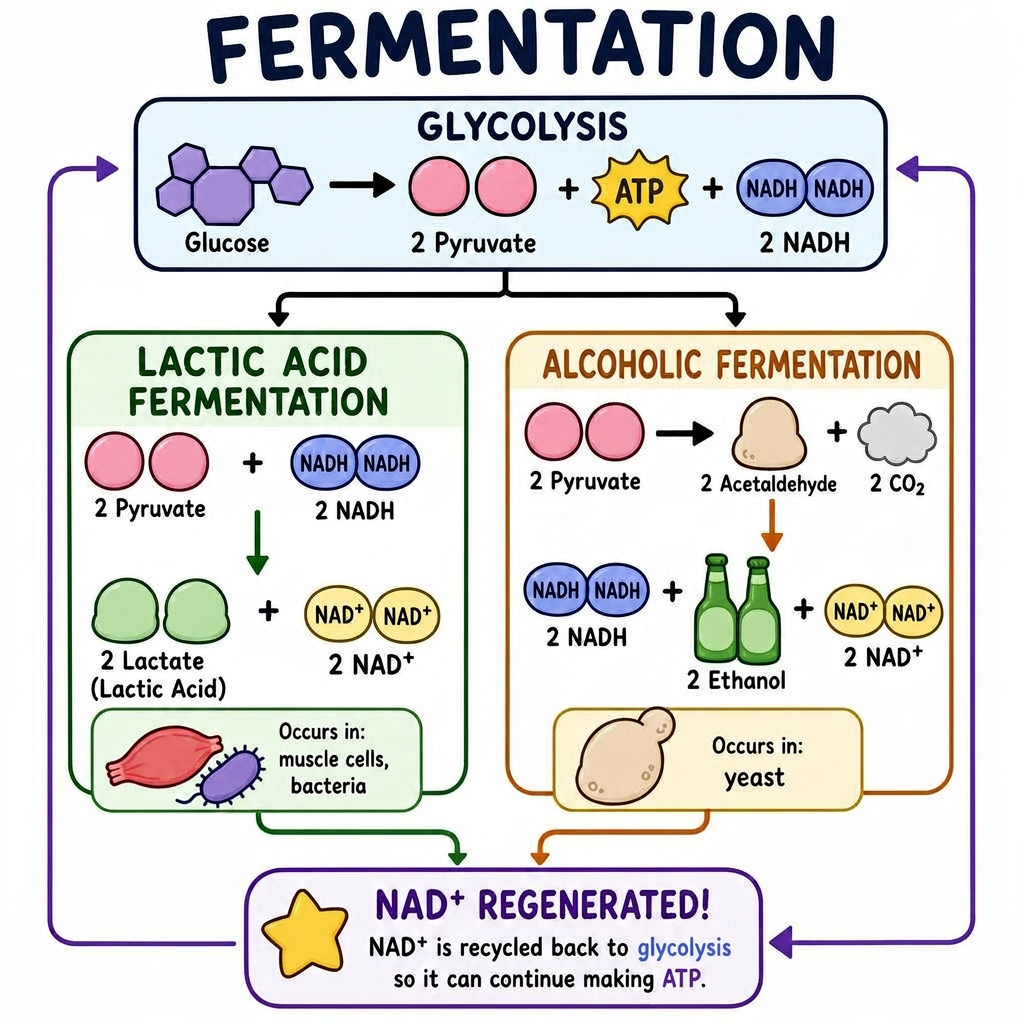
When O₂ runs out, cells can keep glycolysis going (and make 2 ATP) by recycling NADH back to NAD⁺ through fermentation. Lactic acid fermentation (animal muscle, bacteria): pyruvate → lactate. Alcoholic fermentation (yeast, some plant cells): pyruvate → CO₂ + ethanol.
Fermentation doesn't make more ATP itself — it just regenerates NAD⁺ so glycolysis can keep producing those 2 ATP.
Key terms
Quick definitions to lock in before the exam.