
Mutations & Biotechnology
Sequence changes and modern tools.
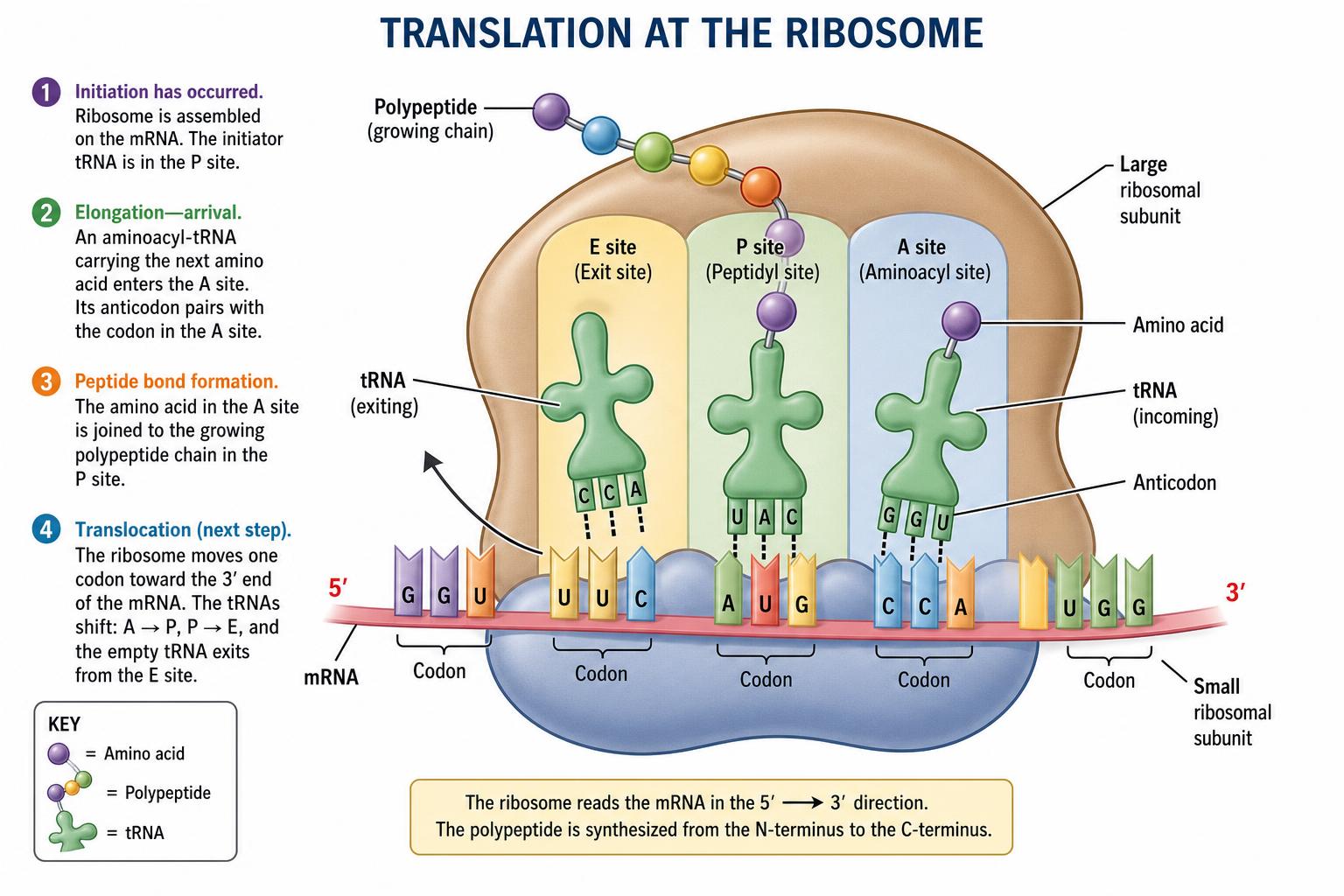
Types of mutations
- Silent: codon changes but still codes for the same amino acid (genetic code is redundant). Usually no effect.
- Missense: codon now codes for a different amino acid. Effect ranges from none to severe (sickle-cell anemia is a classic missense).
- Nonsense: codon becomes a stop codon → truncated protein. Usually severe.
- Frameshift (insertion/deletion of bases not in multiples of 3): shifts the reading frame from that point forward → entirely new (usually nonfunctional) amino acid sequence. Almost always severe.
- Chromosomal mutations: deletions, duplications, inversions, translocations. Often arise from errors in meiosis.
Where mutations come from — and where they go
Mutations arise from DNA replication errors (rare, thanks to proofreading), spontaneous chemical damage, radiation, and chemical mutagens. Mutations in germ cells (sperm, egg) are heritable. Somatic mutations (in body cells) affect only the individual and their descendants in that lineage of cells — many cancers are somatic.
PCR & gel electrophoresis
PCR (polymerase chain reaction) makes millions of copies of a specific DNA region. A reaction mix of template DNA, primers, dNTPs, and heat-stable Taq polymerase is cycled through three temperatures: denature (~95°C, strands separate), anneal (~55°C, primers bind), extend (~72°C, Taq synthesizes new strands). Each cycle doubles the target DNA.
Gel electrophoresis sorts DNA fragments by size in an electric field. Negatively charged DNA migrates toward the positive electrode through an agarose gel; smaller fragments move faster and travel farther. Used to compare PCR products, sequence DNA, and detect specific alleles.
CRISPR-Cas9
Originally a bacterial immune system against viruses, CRISPR-Cas9 is now the most powerful gene-editing tool in biology. A guide RNA designed to match a target DNA sequence directs the Cas9 enzyme to cut at exactly that spot. The cell then repairs the break, sometimes incorporating a new sequence the researcher provides.
Applications: editing crops, treating genetic diseases (sickle-cell, certain blindness), making animal models, even gene drives for pest control. Major ethical debates around editing human germline cells.
Bacterial transformation & recombinant DNA
Plasmids are small circular DNA molecules in bacteria that replicate independently of the chromosome. By cutting a plasmid and a foreign gene with the same restriction enzyme, then joining them with DNA ligase, scientists make recombinant plasmids that can be introduced into bacteria. The bacteria then mass-produce the protein — this is how human insulin is made for diabetics.
Key terms
Quick definitions to lock in before the exam.