
Biodiversity & Disruptions
Disturbances and human impact reshape ecosystems.
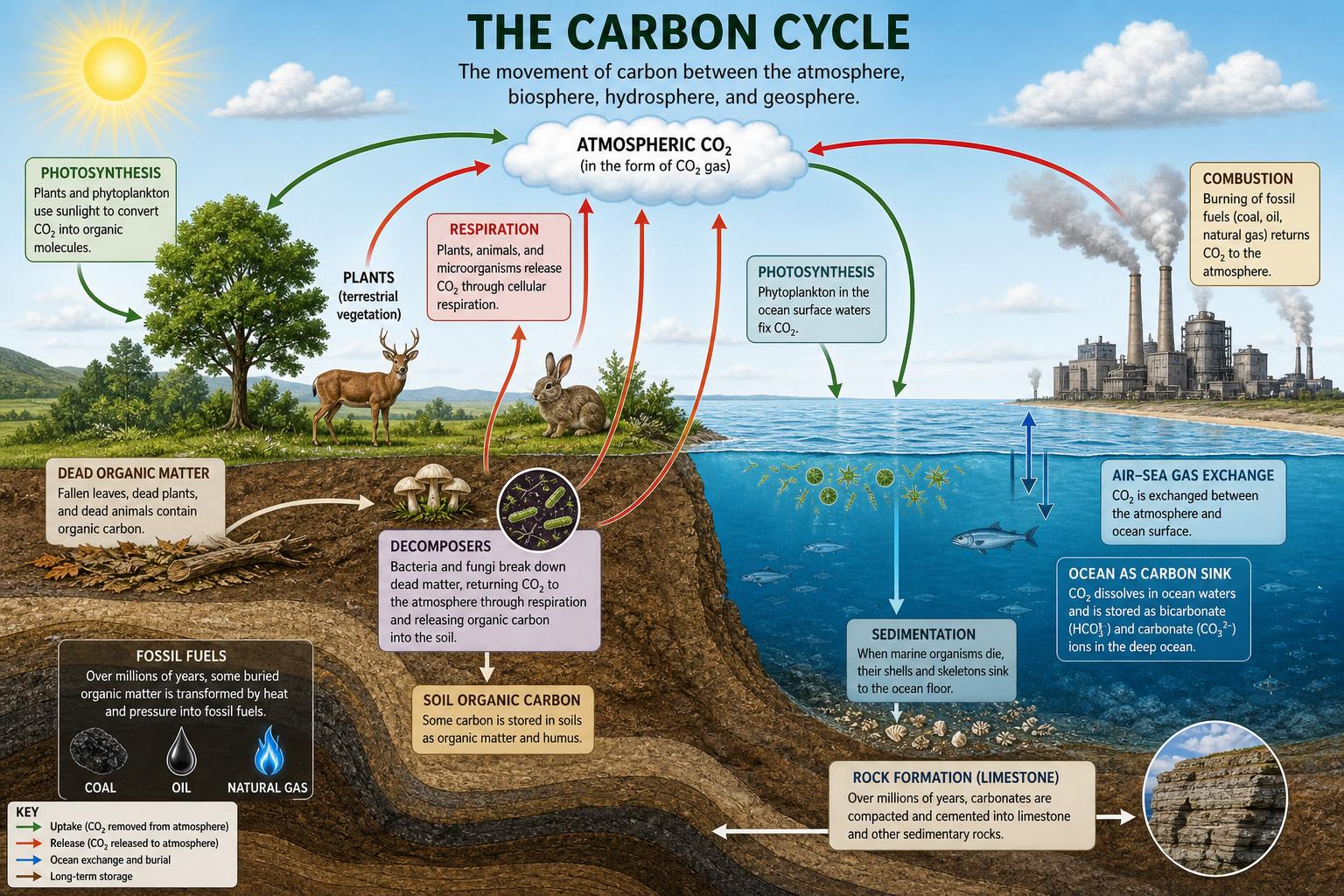
Why biodiversity matters
Biodiversity has three levels: genetic (variation within species), species (variety of species), and ecosystem (variety of ecosystems). Higher biodiversity generally means greater ecosystem stability, resilience to disturbance, and productivity.
Each species also provides 'ecosystem services' — pollination, water filtration, carbon storage, soil formation. Losing species erodes these services in ways we often don't notice until they're gone.
Human impacts
- Habitat loss and fragmentation: leading cause of extinction worldwide. Roads, agriculture, and cities break habitat into isolated patches too small to support viable populations.
- Invasive species: introduced (often by humans) to a new area, then outcompete or eat natives because local species haven't evolved defenses (cane toads in Australia, zebra mussels in the Great Lakes, kudzu in the US Southeast).
- Overharvesting: overfishing, bushmeat hunting, illegal wildlife trade.
- Pollution: pesticides bioaccumulate up food chains (DDT thinning bird eggshells); plastic in oceans; air and water pollution.
- Climate change: rising temperatures, ocean acidification (from CO₂), melting ice, shifting species ranges, altered phenology (when flowers bloom, when birds migrate).
Eutrophication
Nitrogen and phosphorus runoff (from fertilizers, sewage, animal waste) supercharges algae growth in lakes and coastal areas. When the algae die, bacterial decomposition uses up the oxygen — creating hypoxic 'dead zones' (like the one in the Gulf of Mexico) where fish and shellfish suffocate.
Conservation responses
Strategies include protected areas (national parks, marine reserves), wildlife corridors connecting fragmented habitats, captive breeding and reintroduction (California condor, black-footed ferret), habitat restoration, banning trade in endangered species, and large-scale policy on climate and pollution.
Key terms
Quick definitions to lock in before the exam.