
Cell Components & Compartmentalization
Eukaryotic organelles specialize functions inside membrane-bound spaces.
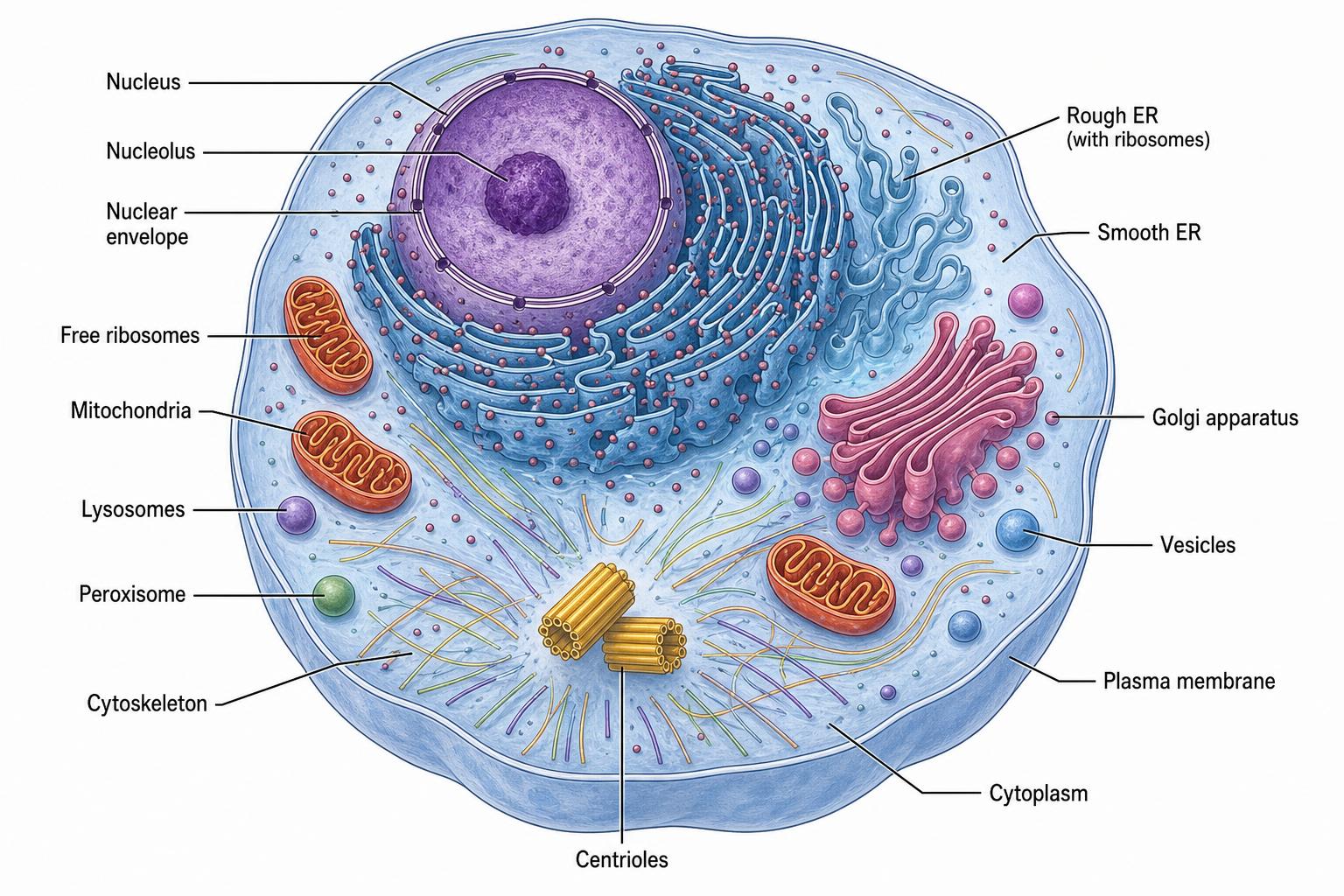
Why compartmentalization matters
Eukaryotic cells run thousands of incompatible reactions at the same time — making lipids, digesting proteins, building DNA, generating ATP. By packaging each process inside its own membrane-bound organelle, the cell keeps the conditions (pH, ion concentrations, enzymes) right for each one without interference.
Prokaryotes have no membrane-bound organelles. They get away with it by being small (short diffusion distances) and using the inner surface of the plasma membrane for processes like the electron transport chain.
Nucleus & ribosomes — the information hub
The nucleus stores the cell's DNA inside a double membrane (nuclear envelope) studded with nuclear pores that control what enters and leaves. Inside, the nucleolus is the site where ribosomal RNA is transcribed and assembled into ribosome subunits.
Ribosomes themselves are not membrane-bound. They float free in the cytosol or attach to rough ER. Both prokaryotes and eukaryotes have them — they're the protein-synthesis machinery of every cell on Earth.
The endomembrane system
Rough ER (studded with ribosomes) synthesizes and folds proteins destined for membranes, lysosomes, or secretion. Smooth ER makes lipids, detoxifies drugs (especially in liver cells), and stores Ca²⁺ in muscle.
From the ER, proteins move via transport vesicles to the Golgi apparatus, which modifies (adds carbohydrate tags), sorts, and packages them into new vesicles bound for the plasma membrane, lysosomes, or secretion outside the cell.
Lysosomes contain digestive enzymes (hydrolases) that work best at acidic pH ~5. They digest worn-out organelles (autophagy), engulfed bacteria (in immune cells), and food vacuoles.
Energy-converting organelles & endosymbiosis
Mitochondria run cellular respiration (ATP production). They have a double membrane, with the inner membrane folded into cristae to maximize surface area for the electron transport chain.
Chloroplasts (plants, algae) run photosynthesis. Light reactions happen in the thylakoid membrane; the Calvin cycle happens in the surrounding stroma.
Both have their own circular DNA, their own ribosomes (prokaryote-sized), and a double membrane. This is strong evidence for the endosymbiotic theory: long ago, a host cell engulfed an aerobic bacterium (→ mitochondria) and later a cyanobacterium (→ chloroplasts), and the relationships became permanent.
Plant-specific structures
- Cell wall: rigid cellulose layer outside the plasma membrane; provides structural support and prevents lysis in hypotonic conditions.
- Central vacuole: large fluid-filled sac that stores water, pigments, toxins; turgor pressure here keeps non-woody plants upright.
- Chloroplasts: photosynthesis.
- Plasmodesmata: cytoplasmic channels through cell walls that let neighboring plant cells communicate.
Cytoskeleton
A dynamic protein network that gives the cell shape, anchors organelles, and enables movement. Three types: microfilaments (actin — cell shape, muscle contraction, cytokinesis), intermediate filaments (mechanical strength, anchor nucleus), and microtubules (tubulin — tracks for vesicle transport, mitotic spindle, cilia, flagella).
Key terms
Quick definitions to lock in before the exam.